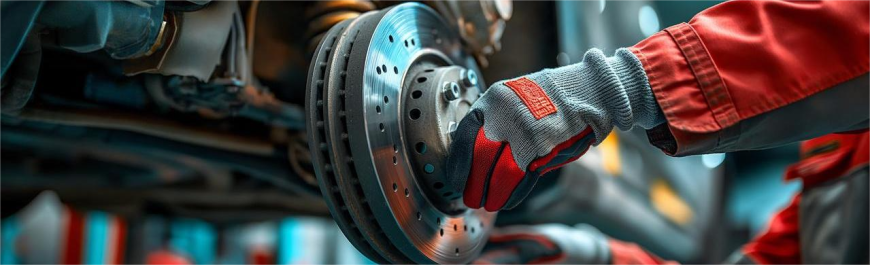

The Language of Brakes: Decoding the Squeal
If your car is making a high-pitched “nails on a chalkboard” sound as you roll through the stoplight on Exchange Street, it’s trying to tell you something. As a technician, I’ve learned that different noises indicate different failures. Understanding these sounds can save you from an expensive brake rotor replacement or, worse, a total brake failure.
The “Morning Squeal” (Moisture & Rust)
In the humidity of a Wisconsin morning, a thin layer of “flash rust” forms on your iron brake rotors. The first three or four times you hit the brakes, the pads scrape this rust off, creating a sharp squeal.
- Is it an emergency? No. If the noise goes away after a few blocks, it’s just physics.
- Master Tech Insight: If you park in a garage, this happens less often because the environment is controlled.
The Constant Squeal (The Wear Indicator)
Most modern brake pads come with a “mechanical wear sensor”—a small metal finger designed to touch the rotor once the pad reaches about 25% life. This creates a constant, high-pitched chirping sound that often stops when you actually apply the brakes.
- The Diagnostic: If you hear a “chirp” while driving that goes away when you step on the pedal, your pads are likely at the 3mm mark.
The Grinding “Growl” (Metal-on-Metal)
If the squeal has turned into a deep, vibrating grind, your pads are gone. You are now pressing a steel backing plate directly against a steel rotor. This is a “Code Red” safety issue.
- The Consequence: Not only is your stopping distance doubled, but you are also destroying the rotors and potentially the calipers, turning a $200 repair into a $1,000 repair.
Safety First: At Blizard Auto Repair, we back our brake work with a North American Warranty. We use premium ceramic pads that include rubberized shims to dampen vibration and eliminate squealing before it starts.
FAQ: Brake Noises
Why do my brakes squeak even though the pads are new? Often, this is due to “glazing.” If new pads aren’t “broken in” (bedded) correctly, the surface can become hard and glass-like, causing a squeak. It can also be caused by poor-quality pads that lack noise-dampening shims.
Does cold weather make brakes noisier? Yes. Brake pad compounds harden in the cold, which changes their “resonant frequency,” making them more prone to squeaking until they warm up.
What does a clicking sound mean when I brake? A click usually indicates that the brake pads are shifting in the caliper bracket. This often means the hardware (clips and springs) is worn or was not replaced during the last brake job.
Is brake dust causing my squeal? It can. Excessive dust buildup between the pad and rotor can act as an abrasive, creating a “whistle” or squeak. A thorough cleaning often solves this.
Can a pebble cause a brake squeal? Surprisingly, yes. In rural Brodhead, small stones can get trapped between the rotor and the dust shield, creating a horrific screeching noise that sounds like the world is ending.