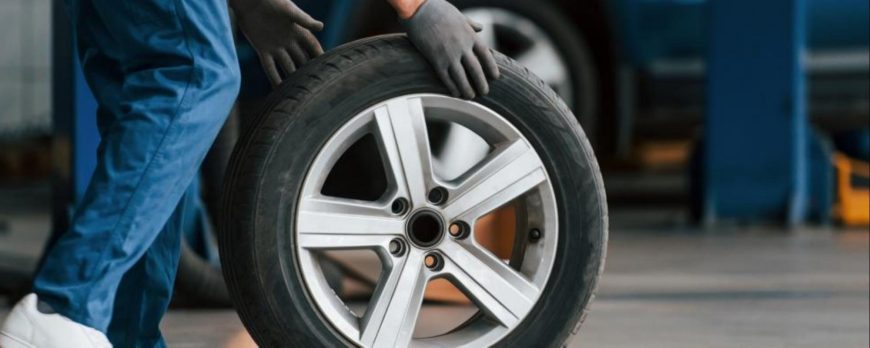

As drivers, we rely heavily on our vehicles to get us safely from point A to point B, rarely thinking about the complex engineering keeping us firmly planted on the pavement. Of all the components on your vehicle, your tires bear the greatest responsibility for your daily safety. They handle the acceleration, absorb road vibrations, navigate sharp corners, and provide the friction necessary to bring thousands of pounds of steel to a complete stop.
Yet, because tires degrade gradually over thousands of miles, it can be easy to overlook their slow decline. Driving on worn-out, compromised rubber drastically increases your stopping distance, ruins your fuel economy, and elevates your risk of a dangerous high-speed blowout. If you find yourself wondering when to replace car tires, you are asking one of the most critical automotive safety questions. Explore how to inspect your rubber like a professional, interpret structural warning signs, and find the best place to buy tires near Brodhead at Blizard Auto Repair when it is time for a brand-new set.
3 Essential Tests: How to Check Tire Tread Depth
Tread depth is the primary indicator of your tire’s health and capability. New tires typically come with $10/32″ \text{ to } 12/32″$ of tread depth. When that depth wears down to $2/32″$, a tire is legally bxald and completely unsafe for public roads.
Fortunately, learning how to check tire tread depth is simple and can be done right in your own driveway using these common methods:
1. The Penny Test for Tire Tread
The penny test for tire tread is a classic, reliable DIY method for checking your remaining rubber. Take a standard U.S. copper penny and hold it between your fingers with Abraham Lincoln’s head upside down and facing you. Insert the coin into one of the deepest grooves of your tire tread.
- If the tread covers any part of Lincoln’s head, your tires have more than $2/32″$ of depth remaining and are still legally roadworthy.
- If you can see the top of Lincoln’s entire head, your tread is dangerously low ($2/32″$ or less), and you need to visit a tire replacement shop Brodhead Wisconsin immediately.
2. The Quarter Test (The Real-World Safety Margin)
While the penny test marks the legal limit, many safety experts recommend replacing tires before they reach that point, especially for driving in heavy rain or winter slush. Perform the exact same test using a quarter with George Washington’s head upside down. If the tread doesn’t reach the top of Washington’s head, your tires are below $4/32″$. At this depth, stopping distances on wet roads increase dramatically, making a replacement highly advisable.
3. Built-In Tread Wear Indicator Bars
Modern tires feature built-in tread wear indicator bars molded directly into the rubber grooves. These bars run perpendicular to the tread pattern and sit exactly $2/32″$ high. When your tire wears down to the point where these bars sit perfectly flush with the surrounding tread ribs, the tire has reached its mechanical limit and must be replaced.
Beyond Tread Depth: Structural Signs It’s Time for New Tires
While tread depth is the most common metric for replacement, a tire can possess plenty of tread and still be incredibly dangerous due to structural aging or environmental damage. Inspect your sidewalls and tread regularly for these critical warning flags:
Visible Signs of Dry Rot on Tires
Rubber is an organic material that breaks down over time due to exposure to UV rays, extreme temperature fluctuations, and ozone. Signs of dry rot on tires include a network of fine cracks creeping along the sidewall or inside the tread grooves. As dry rot progresses, the rubber loses its flexibility and structural integrity, putting you at risk for sudden tread separation while driving at highway speeds.
Sidewall Bulges, Blisters, and Concussions
If you strike a deep pothole or curb hard enough, the internal fabric cords of the tire can rupture while the outer rubber layer remains intact. This creates a distinct bulge or blister on the sidewall. A bulging tire cannot be repaired; the structural integrity is compromised, and it could burst violently at any moment.
Excessive Vibration or Internal Thumping
If your steering wheel or seat vibrates excessively despite having your wheels balanced, the tire may have developed an internal structural deformity. Separated steel belts inside the tire can cause uneven flat spots that ruin your ride quality and jeopardize your vehicle’s handling stability.
Timing the Clock: How Long Do Tires Last in Years?
Even if you don’t drive frequently and your tread looks pristine, age eventually catches up with all rubber compounds. So, exactly how long do tires last years in the real world?
Most major tire manufacturers and automotive safety organizations recommend replacing tires once they reach 6 to 10 years of age, regardless of how much tread depth remains. To determine the exact age of your tires, look for the Department of Transportation (DOT) code stamped onto the tire’s sidewall.
The code ends in a specific four-digit number:
- The first two digits represent the week of production.
- The last two digits represent the year of production.
For example, a DOT code ending in 1422 means the tire was manufactured during the 14th week of 2022. If your tires are pushing past the six-year mark, have them inspected annually by a professional mechanic.
Frequently Asked Questions
Is it safe to replace only two tires instead of all four?
For front-wheel or rear-wheel-drive vehicles, you can safely replace just two tires, provided the new pair is installed on the rear axle to maintain stability and prevent spinning out on wet roads. However, for All-Wheel Drive (AWD) vehicles, all four tires must typically be replaced simultaneously to prevent damaging the complex center differential.
Can a tire with a nail in the sidewall be repaired?
No. Tire repairs (plugs and patches) can only be performed safely within the central tread area of the tire. The sidewall experiences severe flexing and stress during cornering; structural repairs here will not hold and are highly dangerous.
Why do my tires seem to wear out faster on the front of my car?
In front-wheel-drive vehicles, the front tires handle the vast majority of braking forces, steering inputs, and engine power delivery. This causes them to wear much faster than the rear tires, which is why routine tire rotations are so critical to maximizing your investment.
Find the Best New Tires for Your Ride at Blizard Auto Repair
If your tires fail the penny test, show signs of dry rot, or are approaching their expiration date, do not take unnecessary risks with your safety on the road. Protect your passengers and restore your vehicle’s optimal performance by choosing Blizard Auto Repair, the premier tire replacement shop Brodhead Wisconsin drivers rely on.
Our experienced technicians will help you select the ideal all-season, touring, or truck tires tailored to your driving habits and budget. We provide professional installation, precision wheel balancing, and comprehensive alignment checks to ensure your new investment lasts as long as possible. Call us today or visit our shop to explore our wide inventory of new tires Brodhead WI!