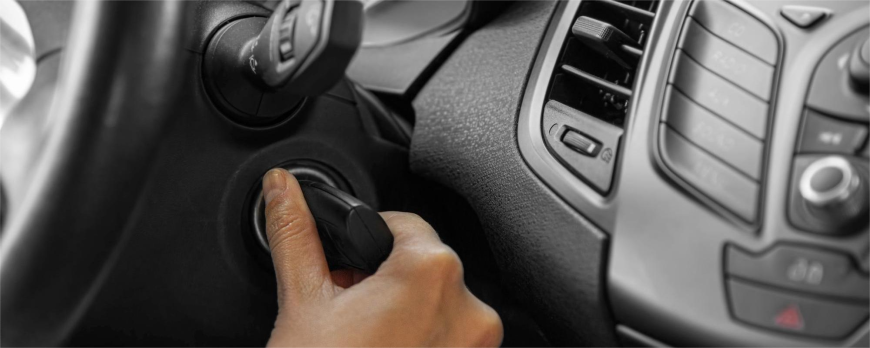

The Morning Struggle: Why Your Car Is Giving You the Cold Shoulder
There is no sound more frustrating than the “click-click-click” of a car that won’t start when you’re already five minutes late for work. In the automotive world, we categorize these issues into two buckets: No-Crank/No-Start (nothing happens when you turn the key) and Crank/No-Start (the engine turns over but won’t “catch”).
The Electrical Trinity: Battery, Starter, and Alternator
The most frequent offender is the lead-acid battery. At Blizard Auto Repair, we use a digital load tester to check a battery’s health. A battery might show 12.6V (static voltage) but drop to 6V the moment a load is applied. If your battery is over three years old, the internal lead plates may have sulfated, preventing them from holding the “punch” needed to engage the starter.
- The Starter Motor: If you hear a single loud “clack” but the engine doesn’t move, the starter solenoid is likely the issue. This is an electromagnet that pushes the starter gear into the flywheel. We check for a “voltage drop” on the B+ terminal to ensure the starter is getting the power it needs.
- The Alternator: If your car started fine, but the lights stayed dim and the engine eventually died, your alternator has likely failed. Its job is to maintain the system voltage at roughly 13.8V to 14.4V. If the diodes inside the alternator fail, it won’t recharge the battery while you drive.
The Fuel and Spark Factor
If the engine is cranking vigorously but won’t start, we look at the “big three”: Fuel, Spark, and Compression.
- Fuel Pump Failure: You should hear a 2-second “hum” from the fuel tank when you first turn the key to the ‘On’ position. No hum? The pump or the relay is dead.
- Crankshaft Position Sensor: This is a tiny sensor that tells the computer exactly where the pistons are. If it fails, the computer won’t “fire” the spark plugs because it doesn’t know when to do it.
Safety First: The “Jump Start” Warning
While jump-starting is common, modern vehicles have sensitive ECUs. Always connect the positive (+) to positive, but the final negative (-) connection should be to a clean, unpainted metal surface on the engine block—never the dead battery’s negative post. This prevents a spark near the battery, which can emit flammable hydrogen gas.
Frequently Asked Questions (FAQ)
Why is my check engine light flashing? A flashing check engine light indicates a severe engine misfire. This means unburned fuel is entering the exhaust system, which can quickly overheat and destroy your catalytic converter. You should stop driving immediately and have the vehicle towed to Blizard Auto Repair to avoid thousands of dollars in damage.
How can I tell if my battery or starter is bad? If you turn the key and hear a rapid clicking, it is usually a weak battery or poor connection. If you hear a single loud “clunk” but the engine doesn’t turn, the starter motor is likely the culprit. At Blizard, we perform a voltage drop test to pinpoint the failure.
Can a cold battery be recharged? Yes, but only if it hasn’t frozen. A fully charged battery won’t freeze until -76°F, but a dead battery can freeze at 32°F. If the battery case is bulging or cracked, it must be replaced. Never attempt to jump-start or charge a frozen battery, as it can explode.
Does 4WD or AWD use more gas in the winter? Yes. Engaging four-wheel drive creates more mechanical friction because the engine must turn extra driveshafts and gears. Additionally, the extra weight of AWD systems contributes to the 10-20% drop in fuel economy typically seen during Wisconsin’s winter months.
Is it safe to drive with the check engine light on? If the light is steady (not flashing) and the car feels normal, you can usually drive it to a shop. However, ignoring it can lead to decreased fuel economy and the failure of other components, such as the oxygen sensors or the catalytic converter, resulting in much higher repair costs later.